Last updated: July 20, 2026
History
Selenite takes its name from Selene, the Greek goddess of the moon, for its pale, glowing appearance. Large translucent slabs have historically been used as a substitute for glass in windows in some regions, owing to their ability to transmit soft light.
Meaning
Selenite is traditionally associated with clarity, purification, and spiritual connection. Many practitioners use it to cleanse the energy of other crystals, believing it does not require cleansing itself.
Geological Information
| Mineral Group | Gypsum (Calcium Sulfate) |
| Hardness | 2 (Mohs Scale) |
| Crystal System | Monoclinic |
| Primary Sources | Morocco, Mexico, United States |
| Color Cause | Naturally colorless to white |
Associated Chakras
Selenite is most commonly linked to the Crown Chakra, the energy center traditionally associated with spiritual connection.
Meditation Uses
Many practitioners rest a selenite wand above the crown of the head during meditation, or pass other crystals over a selenite slab to symbolically clear their energy.
Crystal Care
Selenite is soft and water-soluble — never cleanse it with water. A dry cloth or moonlight is the traditional method.
Frequently Asked Questions
Why shouldn’t selenite touch water?
Selenite is a form of gypsum, which is soft and slowly dissolves in water. Always keep it dry.
See also: Clear Quartz vs. Selenite →
Recommended Products
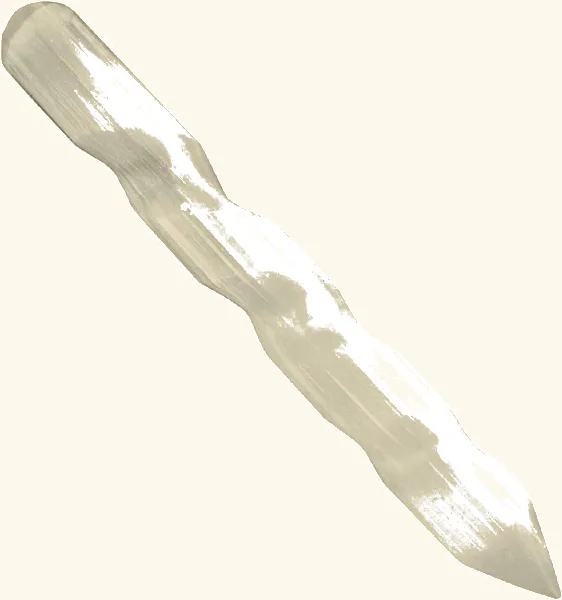
Selenite Charging Wand
A smooth wand often used to clear the energy of other stones.
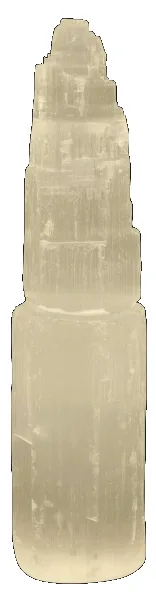
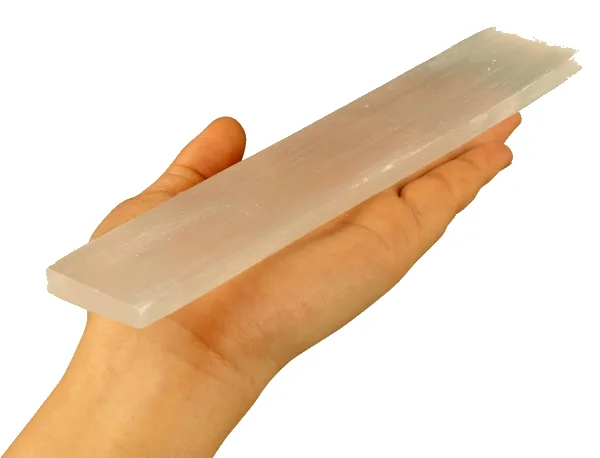
Selenite Charging Plate
A flat slab used to rest and cleanse other crystals overnight.
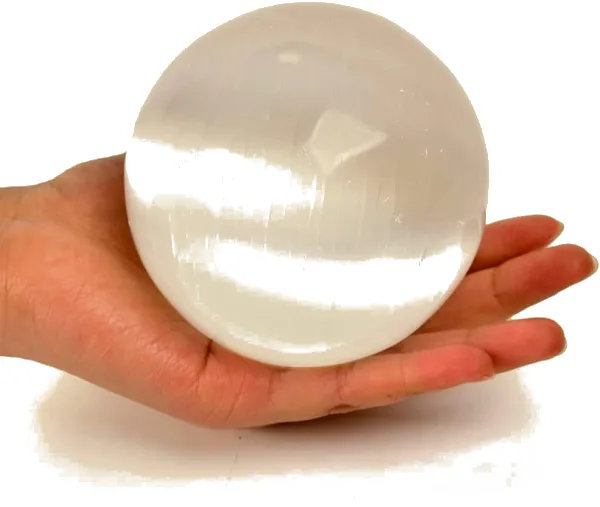
Selenite Sphere
A softly glowing sphere, a calming centerpiece for meditation.
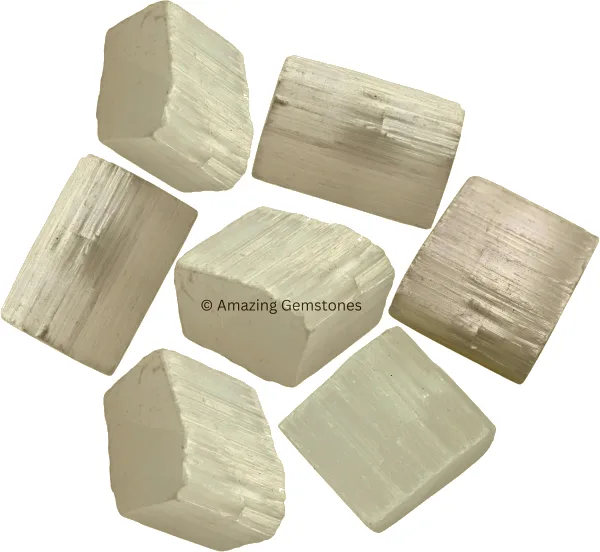
Raw Selenite Chunk
An unpolished natural piece, ideal for beginners exploring selenite.