Last updated: July 20, 2026
Origins of Tarot
Tarot cards first appeared in 15th-century Italy as a card game called tarocchi, played by the nobility of Milan and Ferrara. It was not until the 18th century that occultists in France began associating the deck with divination and esoteric symbolism, a tradition that has continued and evolved into the practice known today.
The most widely recognized deck, the Rider-Waite-Smith, was published in 1909 and illustrated by Pamela Colman Smith. Its imagery became the visual foundation for thousands of decks that followed.
What Tarot Is Used For
Many practitioners use tarot as a tool for reflection rather than prediction — a way of surfacing intuition and considering a situation from new angles. A reading is commonly understood as offering perspective, not certainty.
The Structure of a Tarot Deck
| Total Cards | 78 |
| Major Arcana | 22 cards, numbered 0u201321 |
| Minor Arcana | 56 cards, in 4 suits |
| Suits | Cups, Wands, Swords, Pentacles |
Major vs. Minor Arcana
The Major Arcana cards, from The Fool to The World, are traditionally understood to represent significant life themes and turning points. The Minor Arcana, divided into four suits, is traditionally associated with day-to-day matters — relationships, ambition, conflict, and material life.
Frequently Asked Questions
Do I need to be psychic to read tarot?
No. Most practitioners consider tarot reading a learnable skill based on symbolism and interpretation, not innate psychic ability.
What deck should a beginner start with?
The Rider-Waite-Smith deck is the most commonly recommended starting point, since most other decks and guidebooks reference its symbolism.
Recommended Products
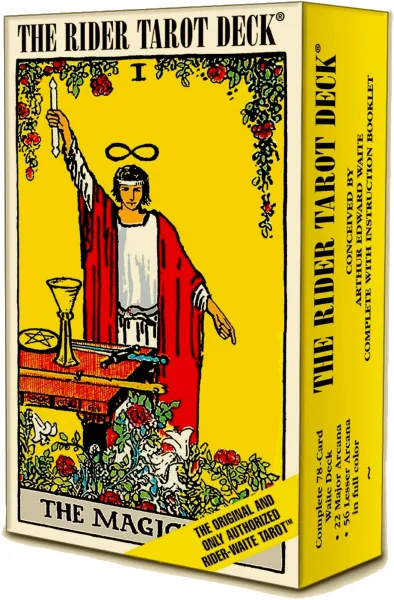
Rider-Waite-Smith Tarot Deck
The classic, most widely referenced deck — the standard starting point for beginners.